

Chrome plating on ABS
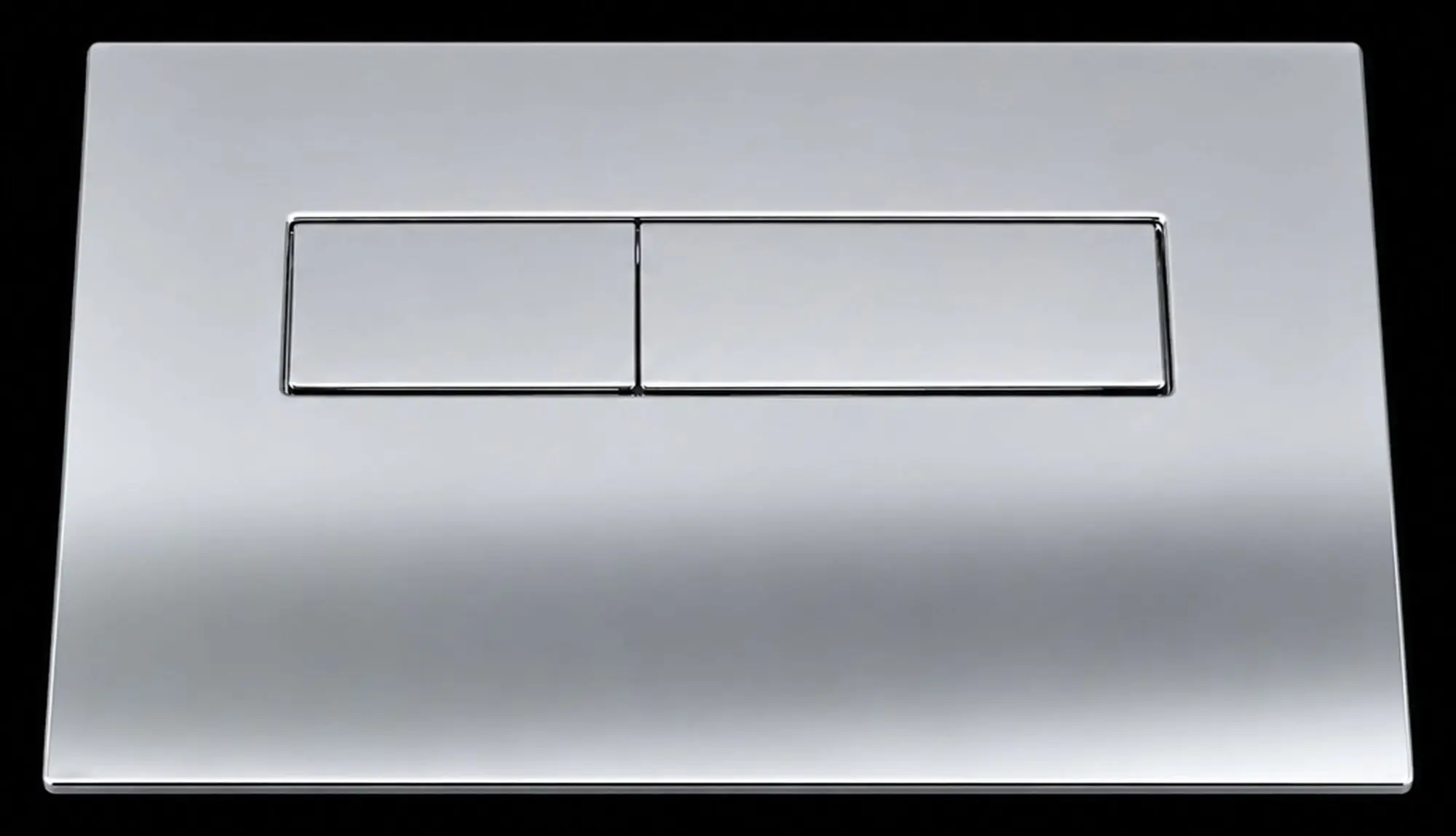
Tri-nickel chrome on ABS, on two automatic lines.
- Lines
- Two, fully automatic
- Capacity
- 340 and 300 lots a day
- Stack
- Tri-nickel, five layers
- Current
- Set for each load by SCADA
- Plastic
- ABS, plating grades
The plating line
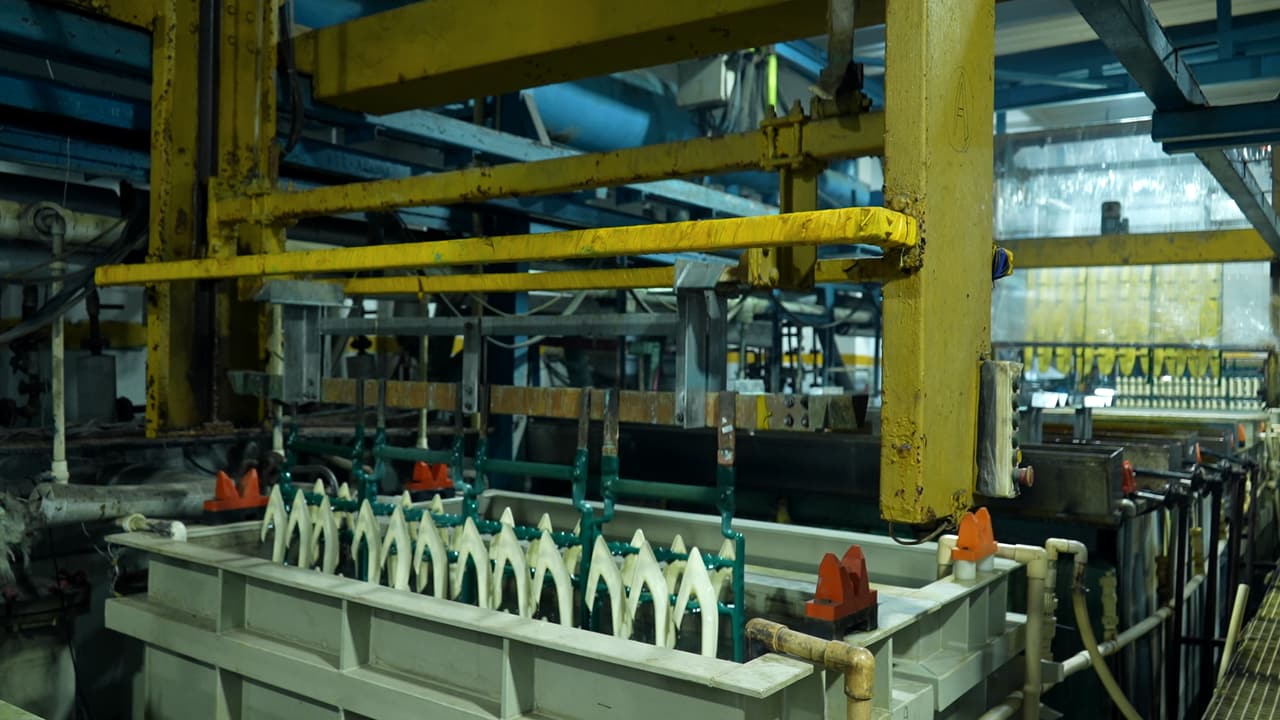
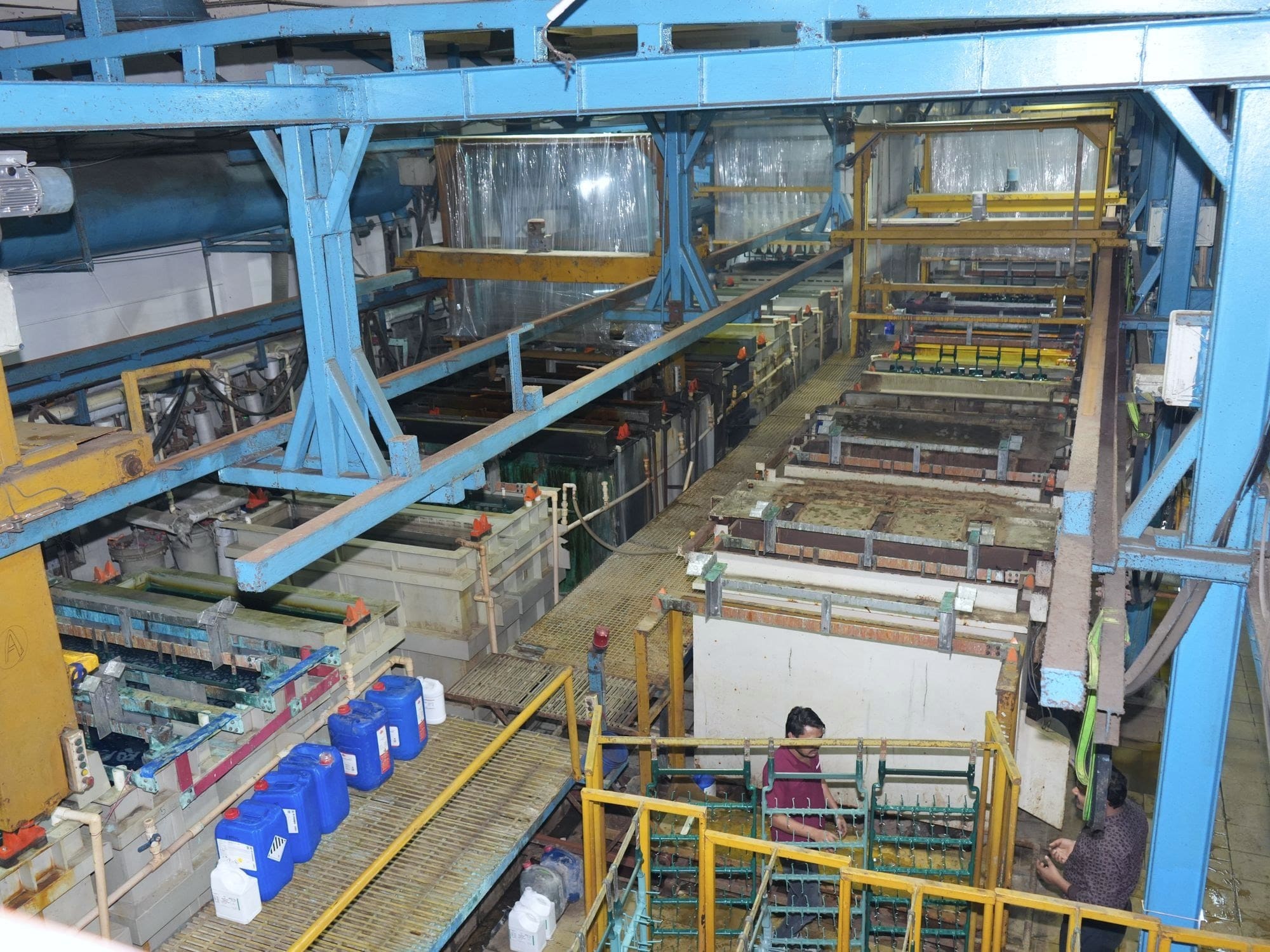
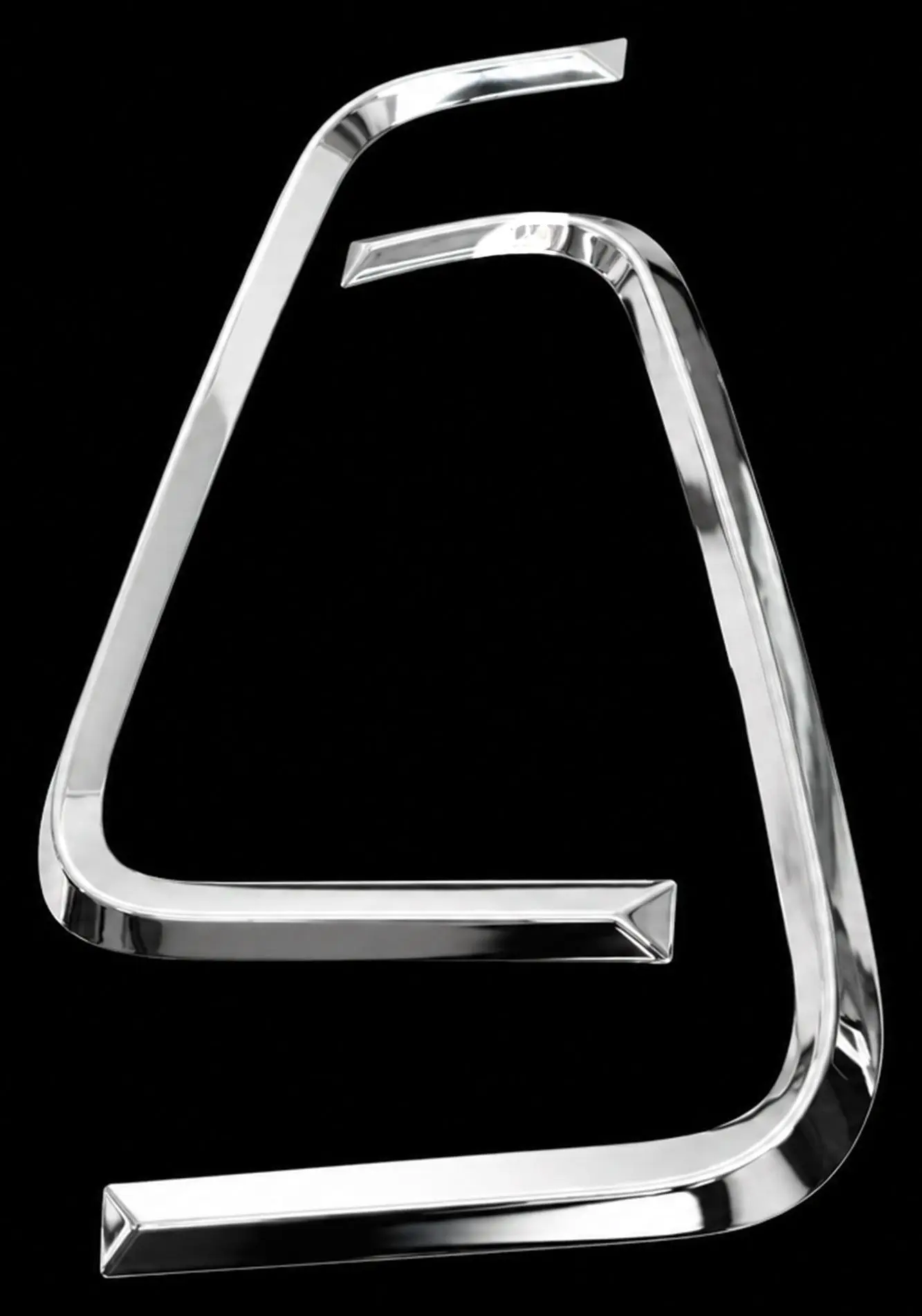
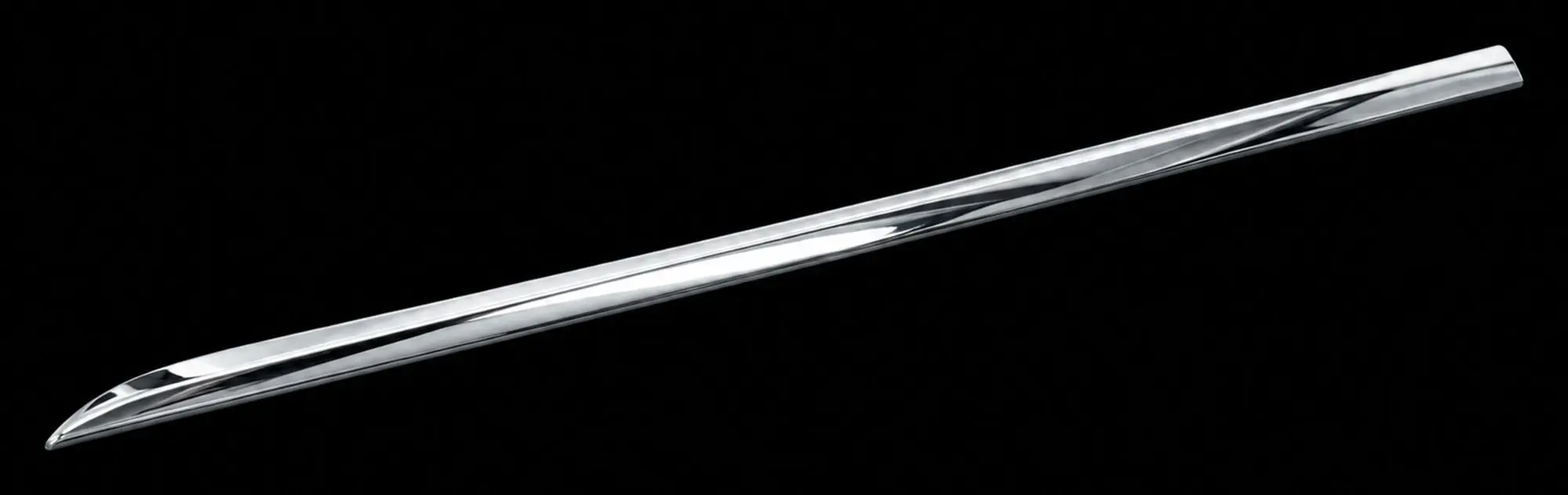
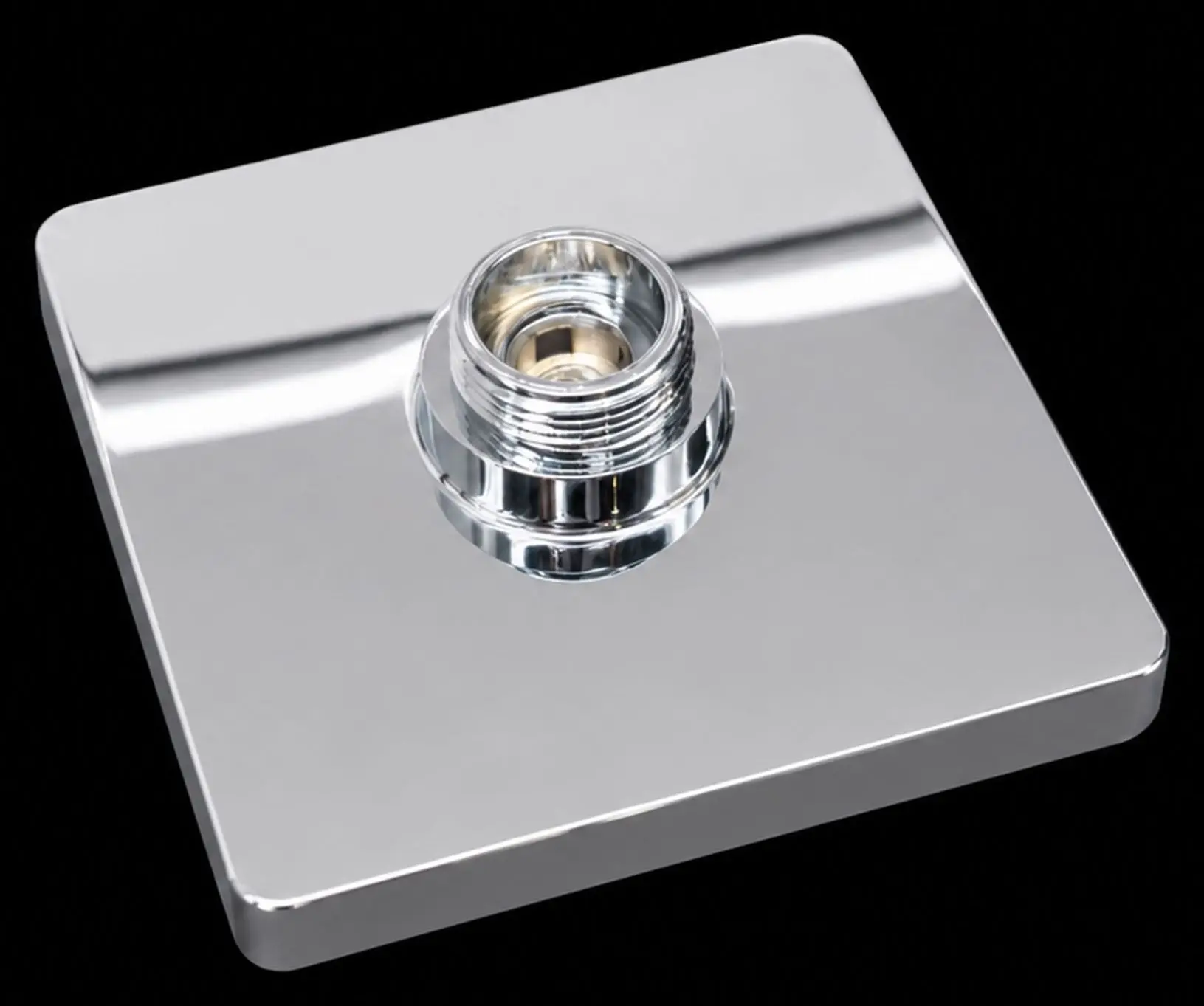
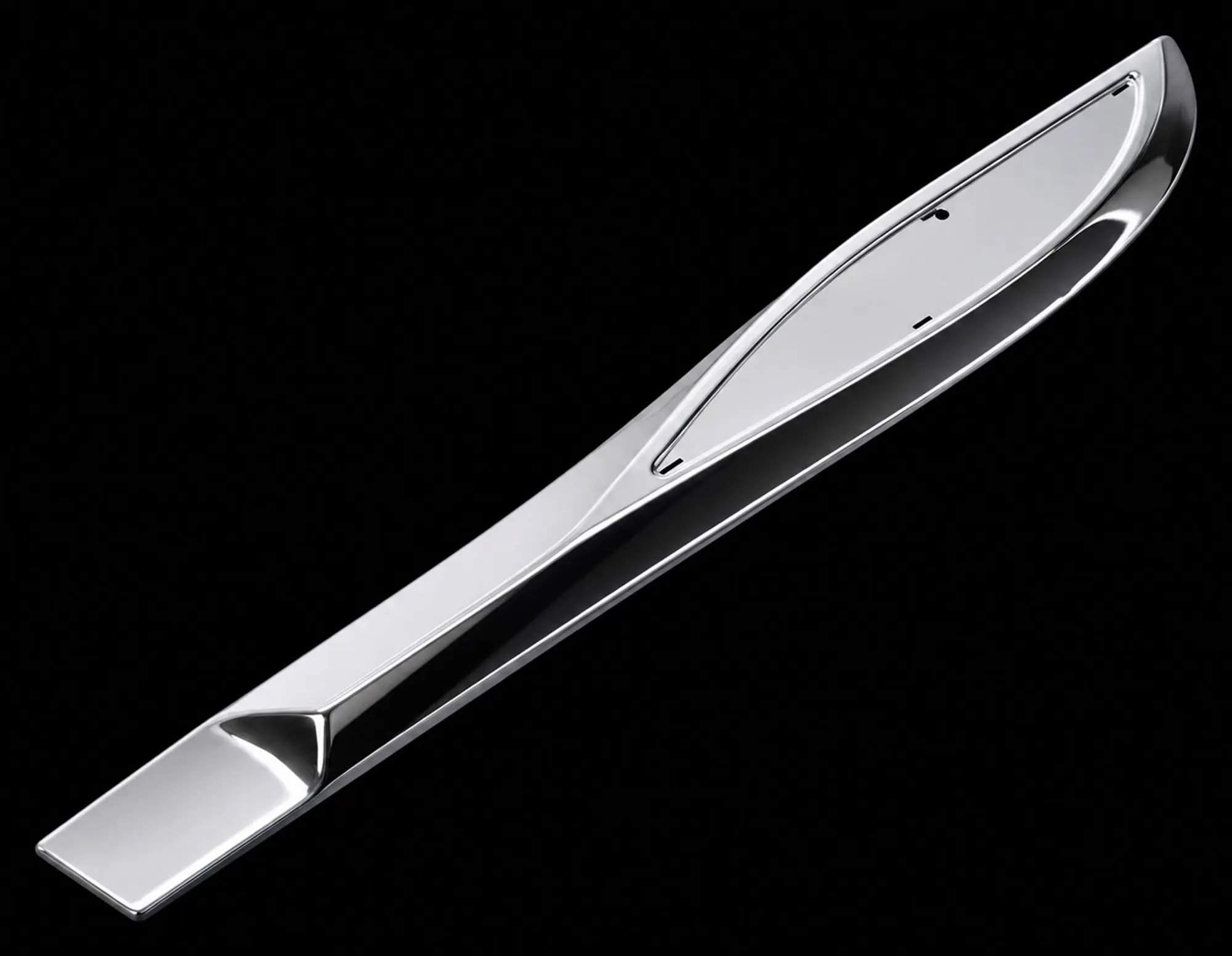
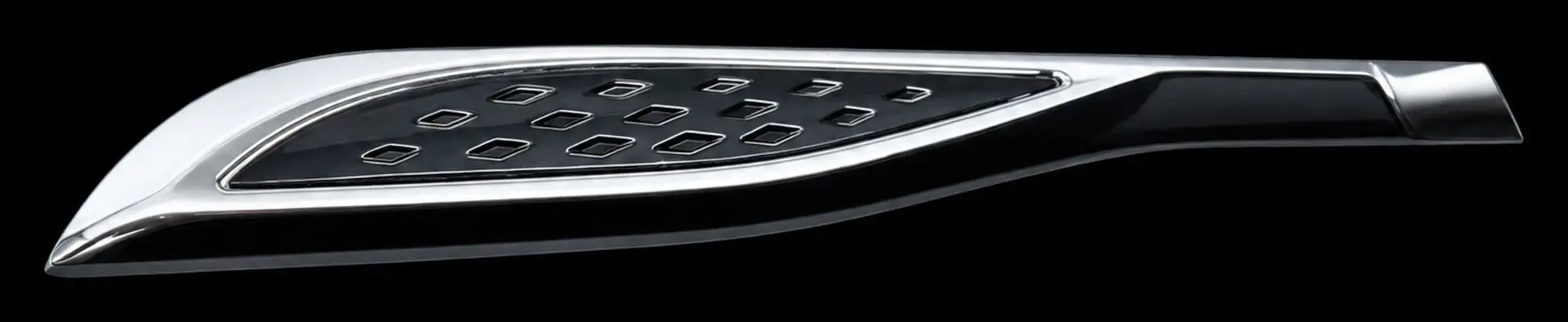
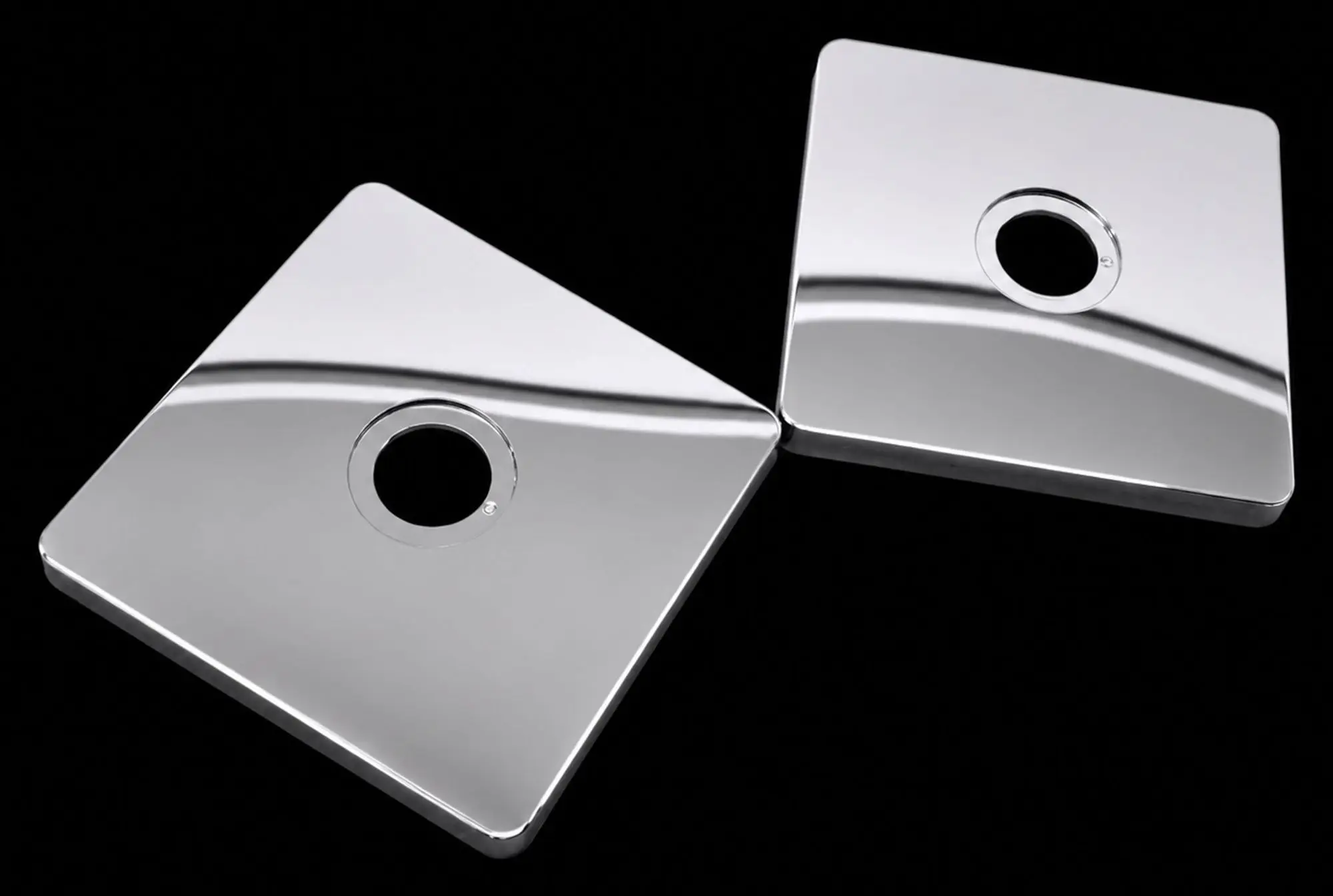
We plate ABS on two fully automatic lines. The first plates 340 lots a day; the second, added in 2020 for white goods, plates 300. The stack is tri-nickel: copper, then semi-bright, bright and microporous nickel under the chrome. That makes five layers, which decorative chrome on vehicles calls for. A SCADA system sets the current for each load, and electro-timers hold the time in every tank. Parts leave the line through a conveyorised drying oven.
Why it holds its shine
Decorative chrome is a fraction of a micron thick. What keeps a part bright for years is the stack underneath it.
- Plating-grade ABSThe moulded part.
- Pre-treatmentEtching and activation prepare the plastic, and a thin chemically deposited metal layer makes it conductive.
- CopperSoft and ductile: it levels the surface and absorbs the stress of heat and cold.
- Semi-bright nickelSulphur-free, and the main barrier against corrosion.
- Bright nickelGives the depth and shine under the chrome.
- Microporous nickelMakes the chrome above it microporous, so corrosion spreads over thousands of tiny sites instead of digging one pit.
- ChromeA hard, blue-white skin that resists scratches and tarnish.
One rack, from loading to packing
The line takes the colour the part has reached at each step, from moulded plastic to a thin grey metal skin, then copper, nickel and chrome.
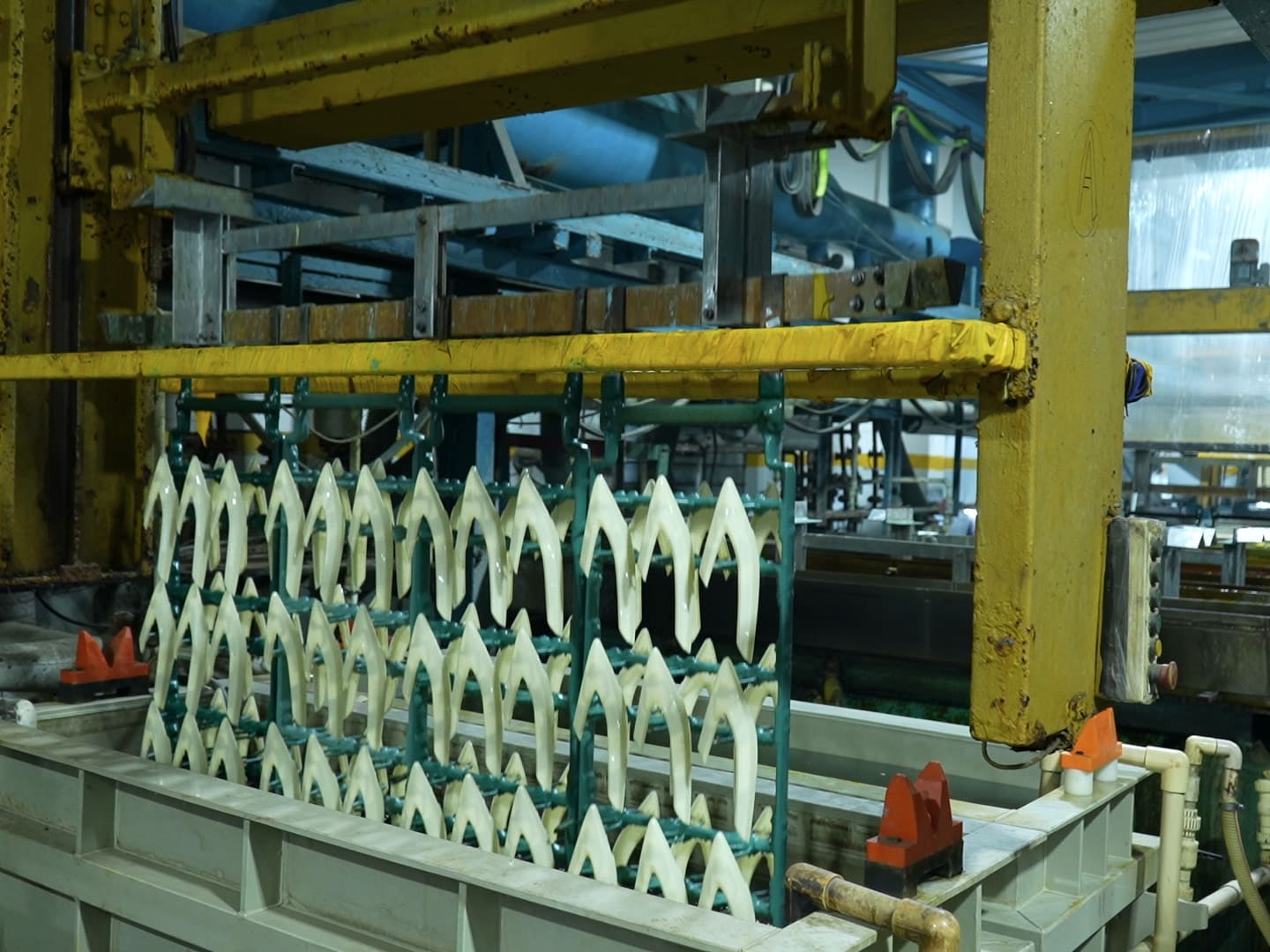
Into pre-treatment Etching and activating the plastic
Still plastic, its skin opened up
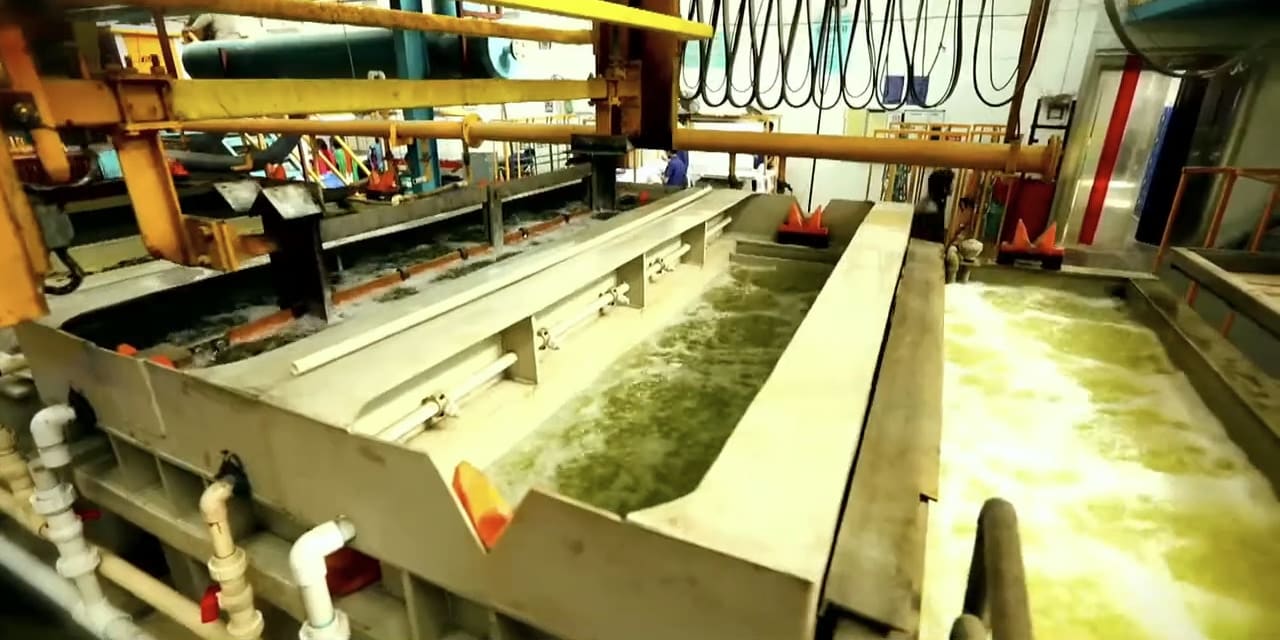
A bath on the line, agitated by air A thin chemical metal layer to make it conductive
A thin metal skin, so it conducts
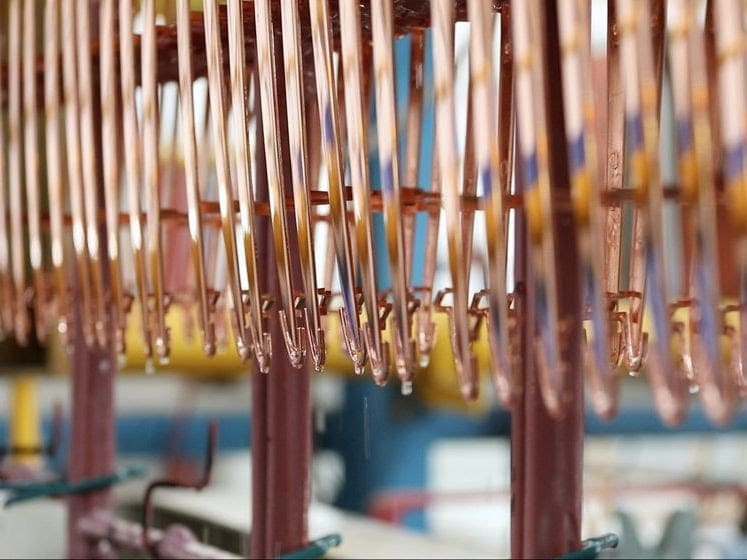
After the copper bath Copper
Copper-coloured
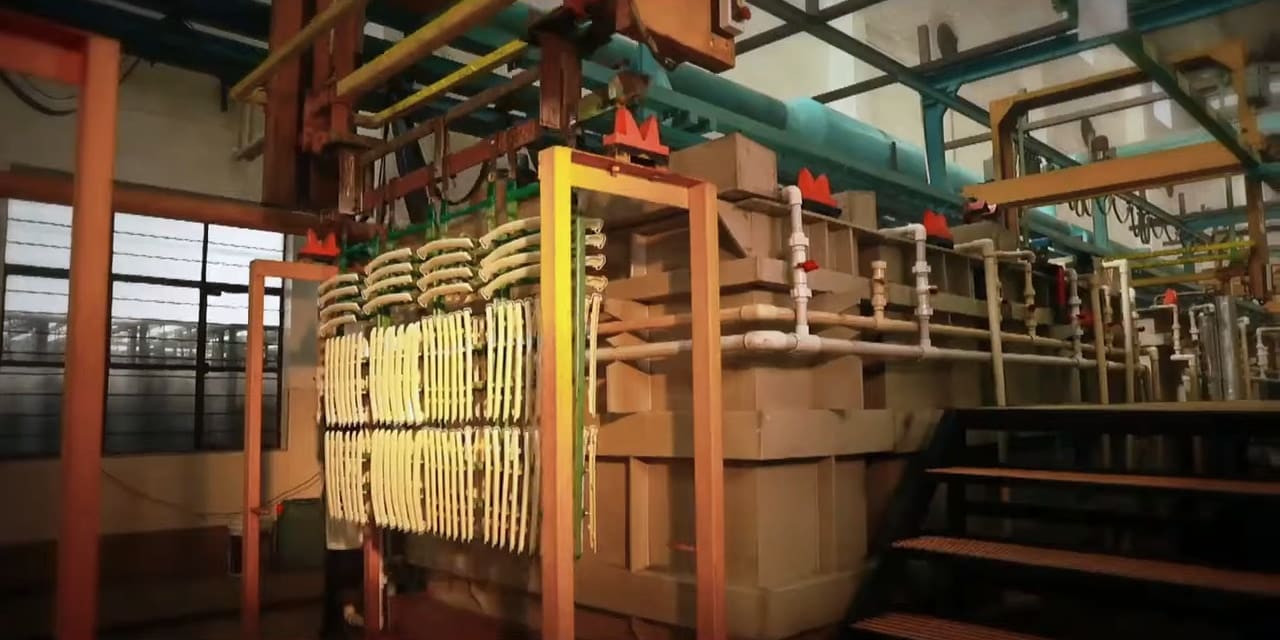
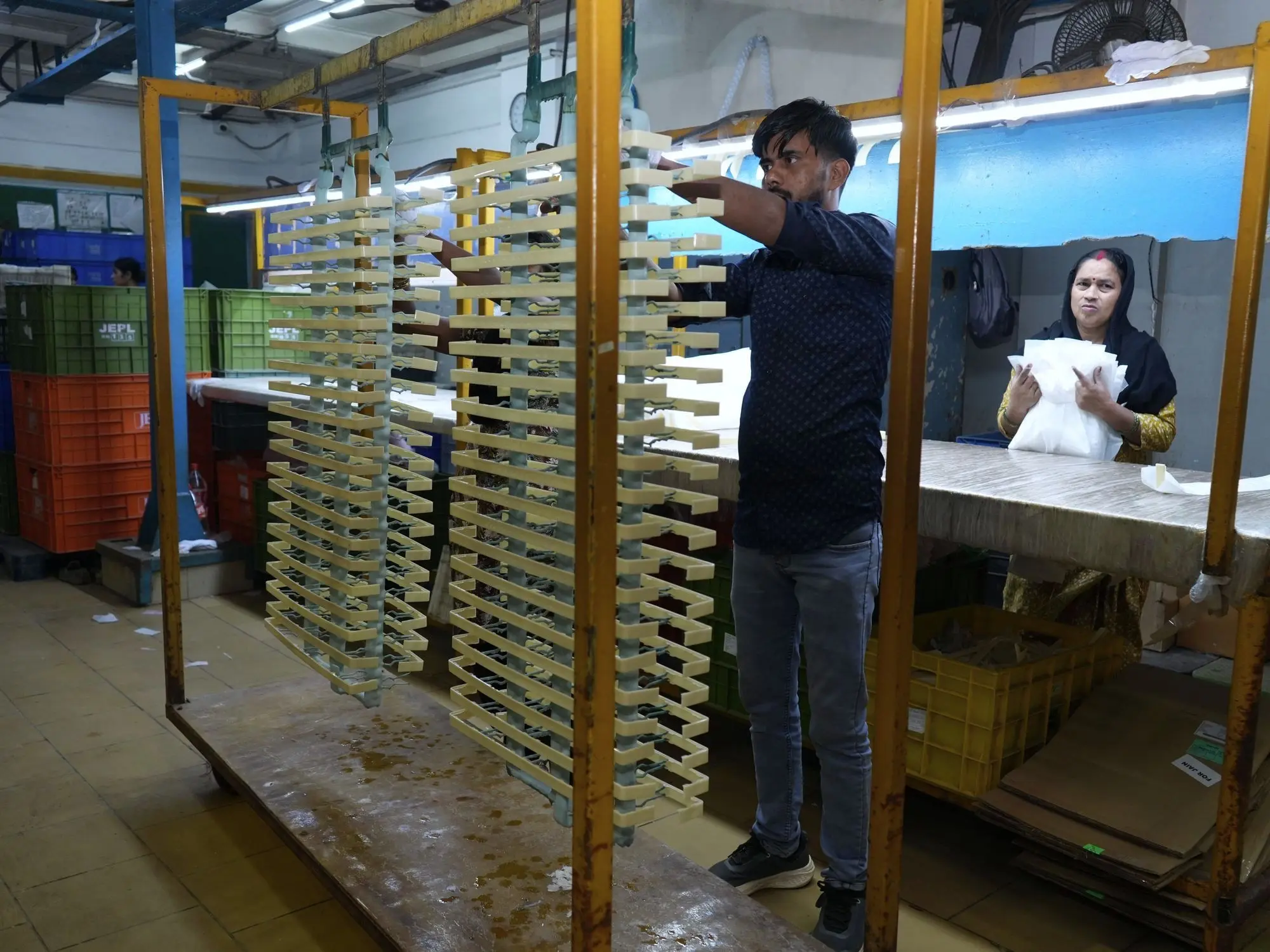
Racks loaded for the line Semi-bright, bright and microporous nickel
Bright, a shade warmer than chrome
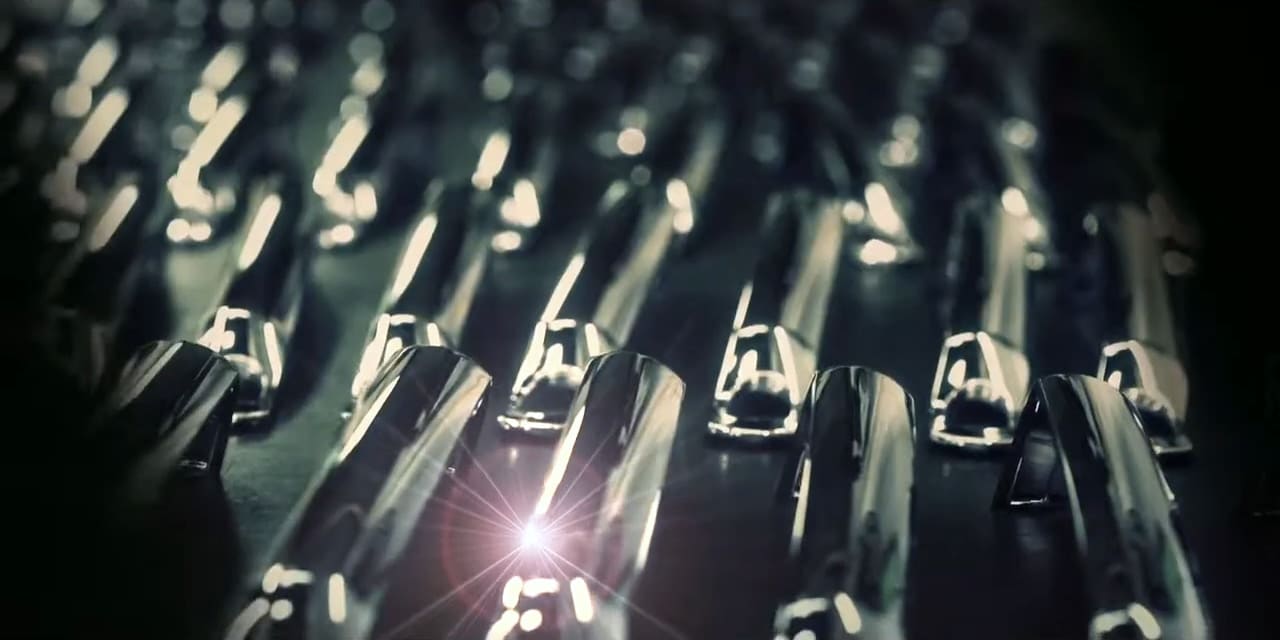
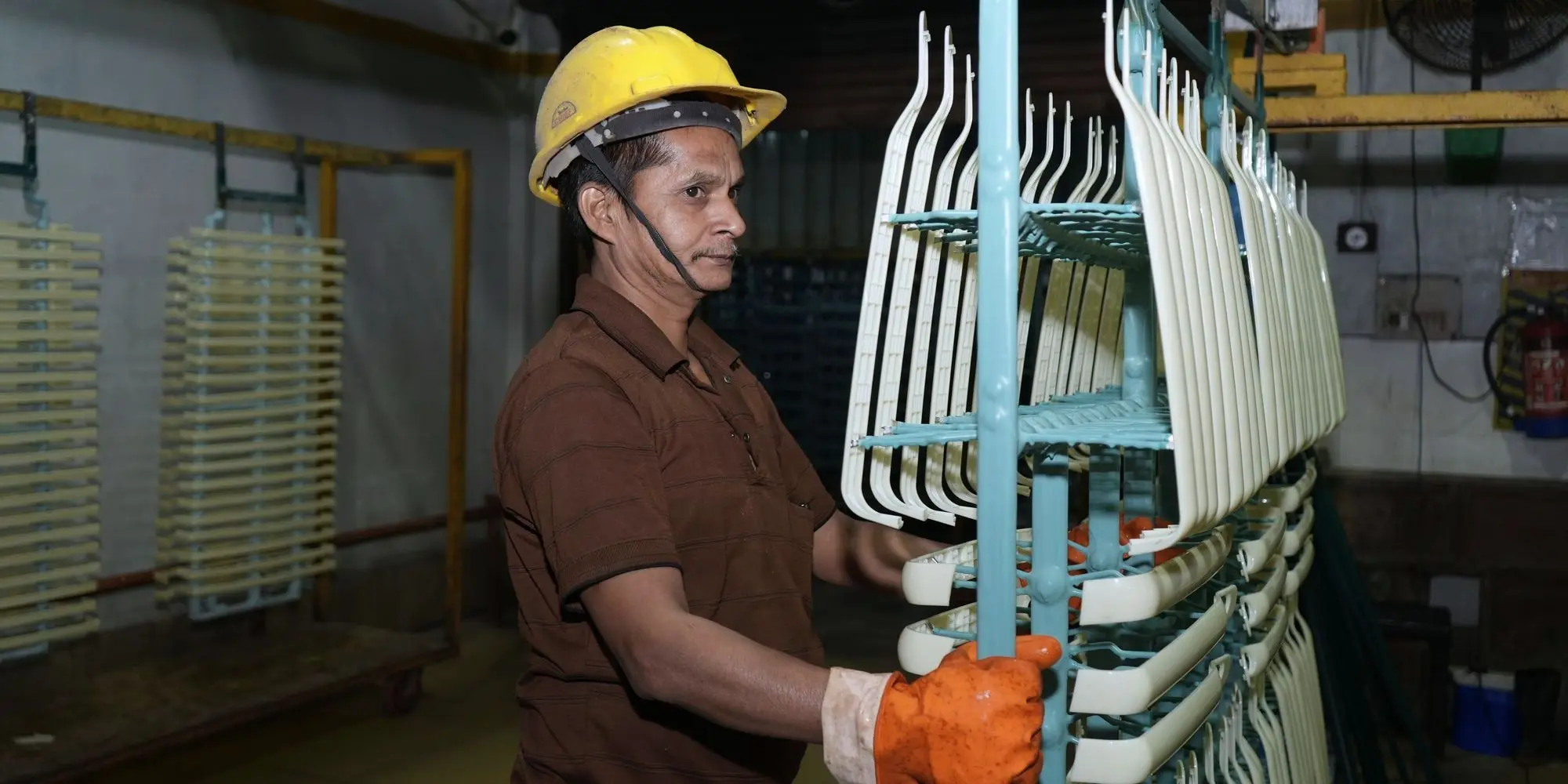
Plated parts on the rack Chrome
Mirror-bright, the finished face
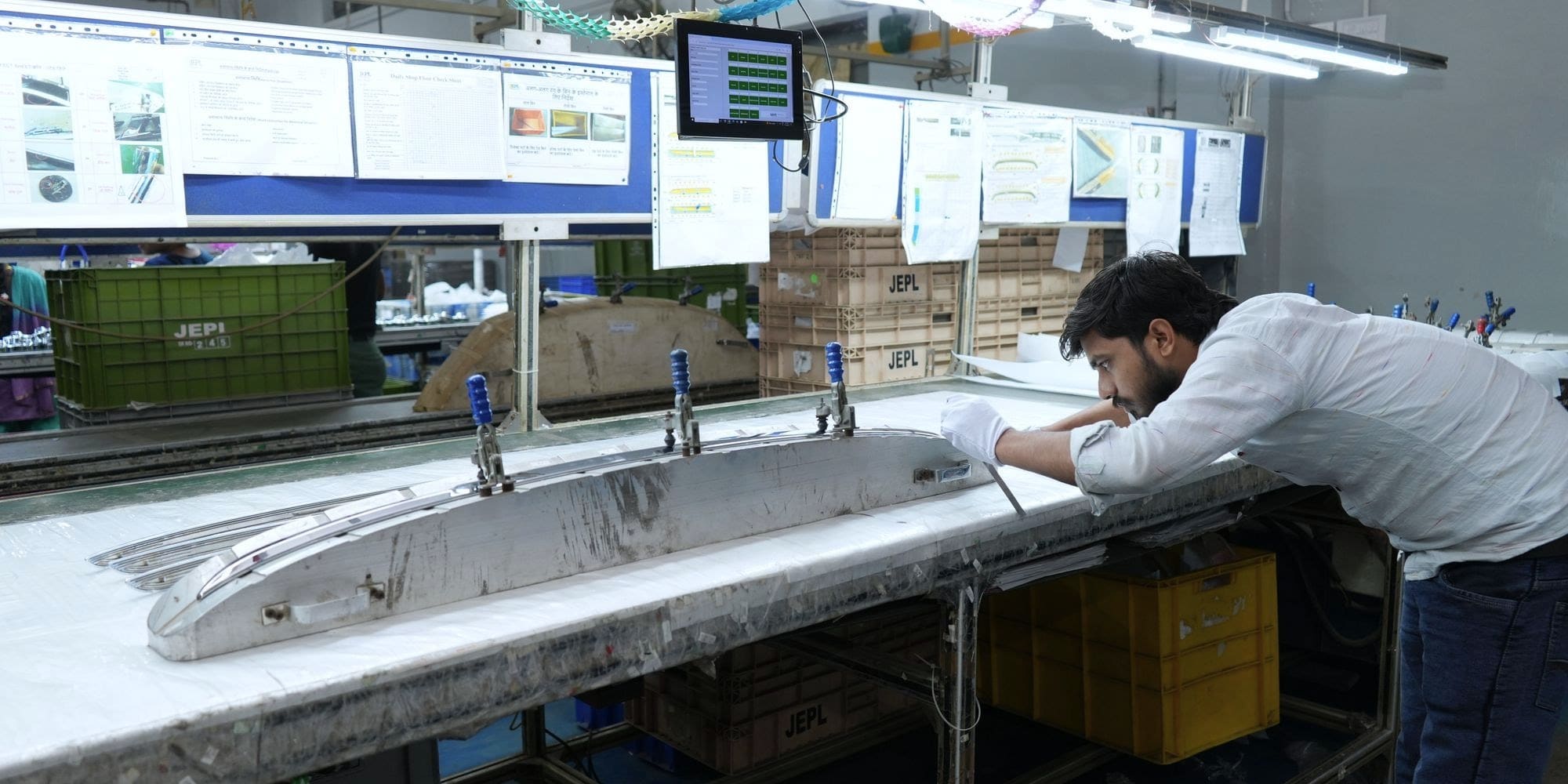
Final inspection Inspection and packing
Checked under the lights
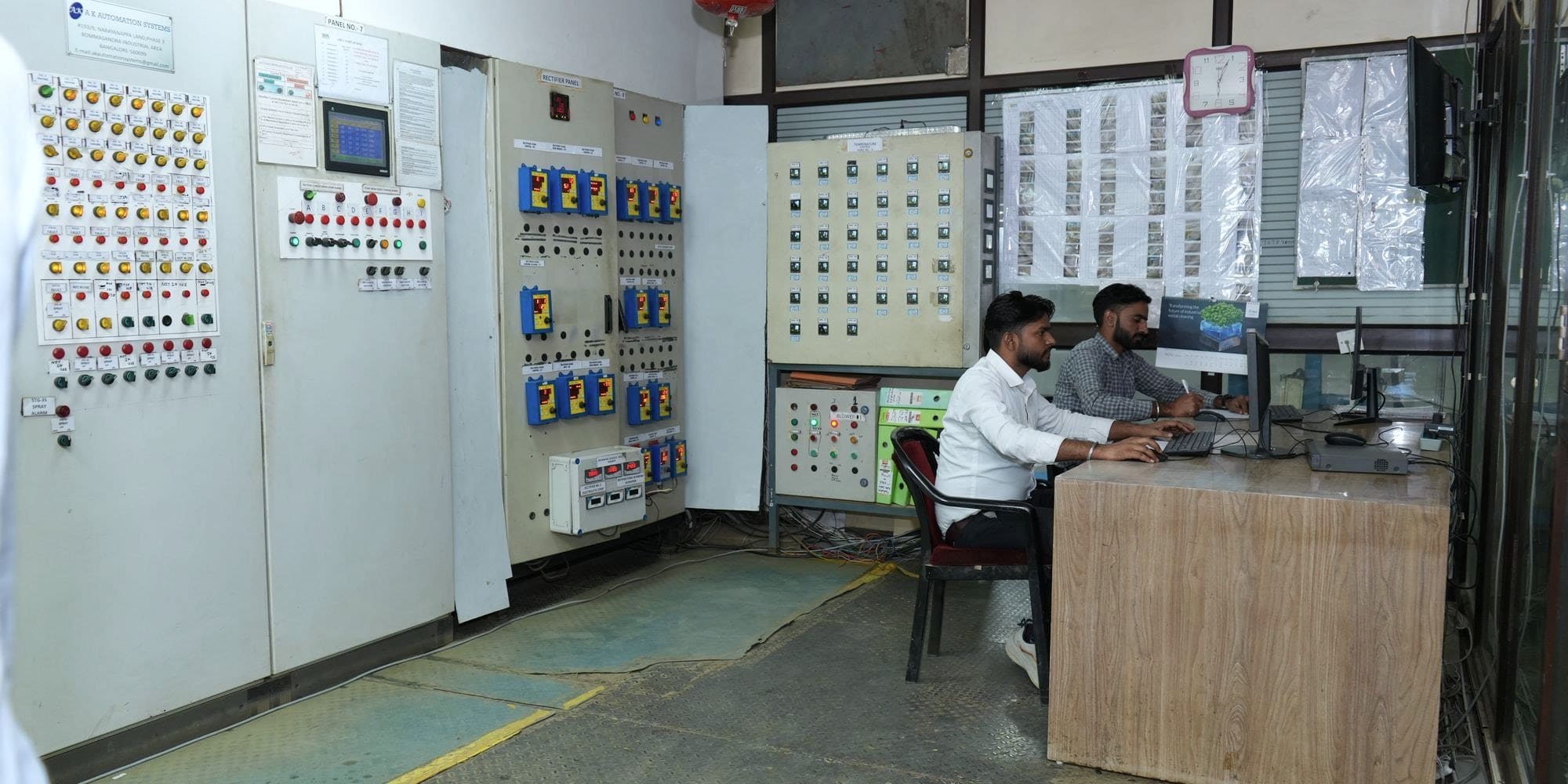
The line, and what keeps it running
SCADA sets the current for each load from the control room. Two 500 kVA gensets and two UPS units carry the lines through power cuts.
- Line 1: automatic tri-nickel chrome line, PLC and SCADA controlled, 340 lots a day
- Line 2: automatic chrome plating line, added in 2020 for white goods, 300 lots a day
- Conveyorised drying oven
- Gensets, 500 kVA each, 2 of them
- UPS, 350 kVA, and 300 kVA for the second line
- Fume scrubbers, 40 HP and 30 HP
- Effluent treatment plant
On the line

Send us your drawing
PDF, STEP, DWG or a photo of the part, with roughly how many you need and the finish.
We reply within 2–3 working days.
- Call
- +91 70278 89712Navit Rathee
Drop your drawing hereAttach your drawing or a photoAttach your drawing on the quote form
- Drawing
- None attached
- Formats
- PDF, STEP, IGES, DWG, DXF, STL, JPG, PNG
- Limit
- 5 files, 20 MB each
- Used
- Only to prepare your quote